
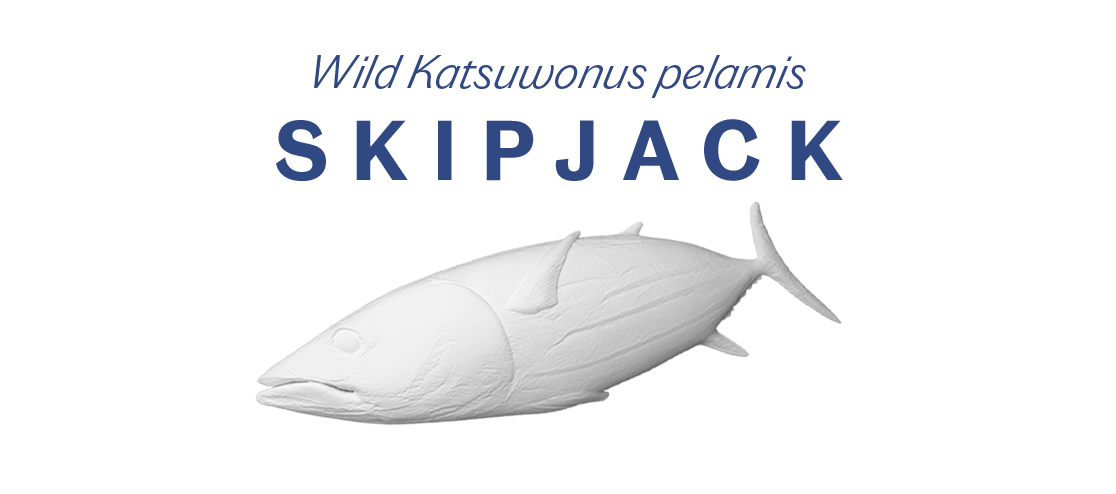
TUNA FILLETS IN ORGANIC EXTRA VIRGIN OLIVE OIL
Skipjack tuna fillets are appreciated for their more intense flavour and firm, meaty texture, enhanced by the gentle and subtle notes of our organic olive oil.
ORIGIN
FISHING
CAPTURED IN
PRODUCED FROM & PACKED
Our Skipjack tuna fillets are carefully prepared with fresh fish and hand-packed in organic extra virgin olive oil or water by experienced local artisans. To ensure an exceptional flavour experience and a tender, juicy texture, our canned Skipjack tuna is left to "mature" for at least six months, allowing all its flavours to intensify and its texture to become even more delicate.
Skipjack tuna (Katsuwonus Pelamis), organic extra virgin olive oil (29%) and salt. Contains 29% ingredients of organic agricultural origin. Certified by PT-BIO-02.
Natural product, without preservatives or additives. Source of protein and Omega-3 (347mg/100g)
Allergens: Fish.
NUTRITIONAL INFORMATION (per 100 g of drained product)
- Energy: 674 kJ / 160 Kcal
- Lipids: 4.5 g * of which saturated: 0.9 g
- Carbohydrates: < 0.5 g * of which sugars: < 0.5 g
- Proteins: 29.8 g
- Salt: 1 g
To be enjoyed on the day of opening. Refrigerate in a closed container for 2 days if not consumed completely.
Store in a cool, dry place.

AZORES


Tuna fishing in the Azores is a centuries-old tradition that plays an important role in the culture and economy of the archipelago.
It mainly takes place between June and September, when species like the Skipjack (locally known as "atum gaiado"), the most abundant off the coast of the Azores, migrate to the nutrient-rich waters of the North Atlantic. The Azorean waters, due to their biodiversity and favourable conditions, allow for the capture of high-quality tuna that is prized around the world.
Azorean fishermen are known for using sustainable fishing methods, particularly the "pole and line" technique, an artisanal and environmentally responsible practice. Instead of nets, fishermen use poles and hooks with live bait to catch tuna individually, avoiding accidental catches of other species and reducing environmental impact.
This artisanal method not only helps preserve tuna stocks but also ensures the quality of the fish, which, by avoiding the stress of mass capture, maintains its texture and flavour. Furthermore, as “pole and line” fishing involves local communities, it creates jobs and keeps alive a tradition passed down through generations.
In recent years, the sustainability and quality associated with Azorean tuna have gained global recognition, enhancing the value of the region and its products in the international markets.
The non-governmental organization "Earth Island Institute" certifies Azorean tuna fishing as "Dolphin Safe" and identified it as one of the first in the world to meet all "Friend of the Sea" (FOS) criteria.